Quality & testing
Quality you can see.
Our concentrated Antler Lingzhi extract is independently analysed for beta-glucan and ganoderic acid A. Clear results, carefully made, 3–5 drops daily.
See the measured results
Independently analysed
Two components.
Clearly measured.
An Antler Lingzhi extract sample was analysed by Japan Food Research Laboratories. These are the measured concentrations in the submitted sample.
01 · Beta-glucan
4.36%
A naturally occurring polysaccharide found in mushrooms. Measured as 4.36 g per 100 g using an enzymatic method.
02 · Ganoderic acid A
0.14%
A characteristic triterpenoid associated with Lingzhi. Measured as 0.14 g per 100 g using liquid chromatography-mass spectrometry.
Our quality approach
From Lingzhi
to your daily routine.
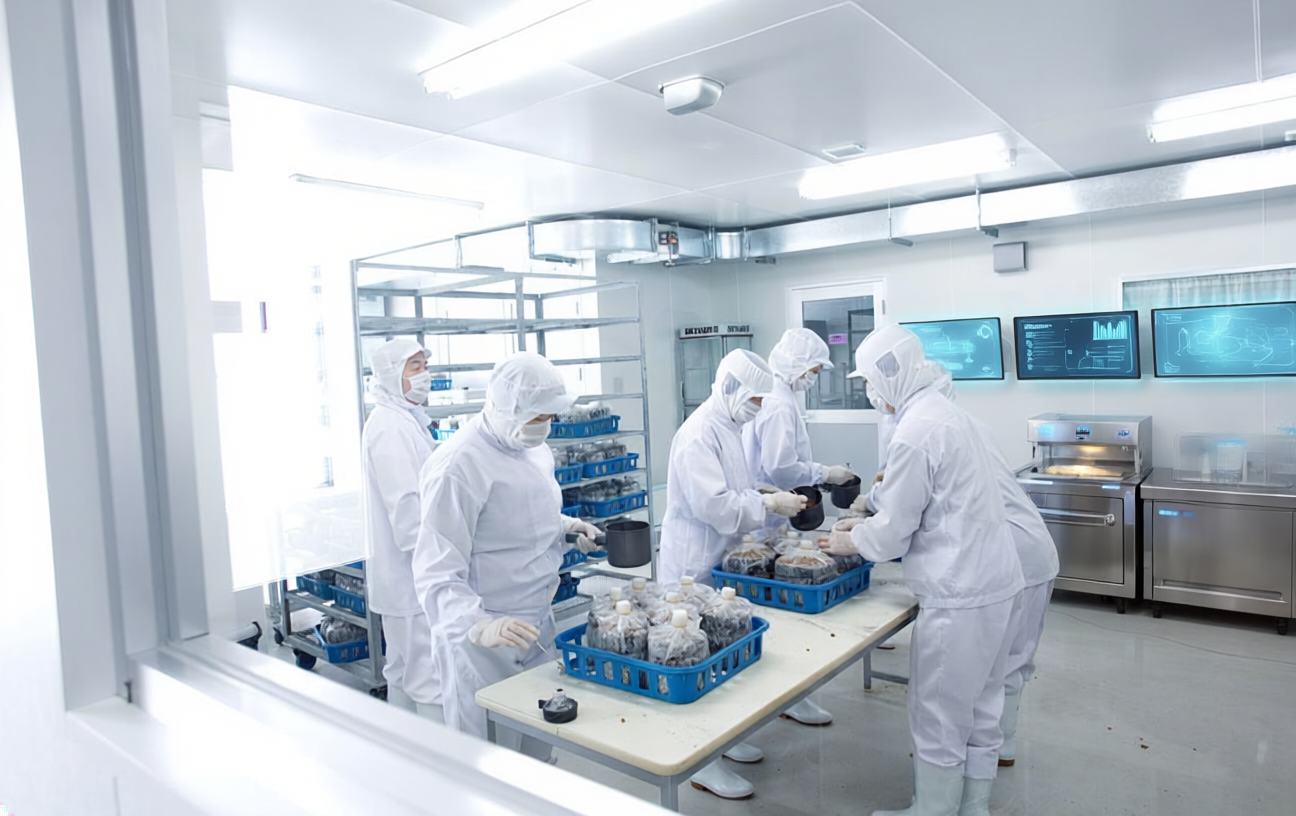
The ingredient is carefully prepared as a concentrated liquid designed around one simple daily serving.
Inside Lingzhi
More than a name on the label.
Lingzhi contains several naturally occurring components. Beta-glucans and ganoderic acids are two of the groups commonly examined when Lingzhi extracts are characterised.
- Beta-glucan
- A mushroom-derived polysaccharide measured in the tested extract.
- Ganoderic acid A
- One of the triterpenoid compounds associated with Lingzhi.
What the results mean
Measured components.
No mystery.
The reports confirm the measured amounts of beta-glucan and ganoderic acid A in the submitted Antler Lingzhi extract.
Laboratory analysis describes the tested sample. It does not assess or establish clinical effectiveness.
REISHI Lab.
Concentrated Lingzhi.
Quality made visible.
3–5 drops daily, with independent component results available to read.
