The Lingzhi journal
Ganoderma lucidum.
A story still unfolding.
Known as Lingzhi. Known as Reishi. Discover the mushroom behind a long tradition—and the questions modern science is asking.
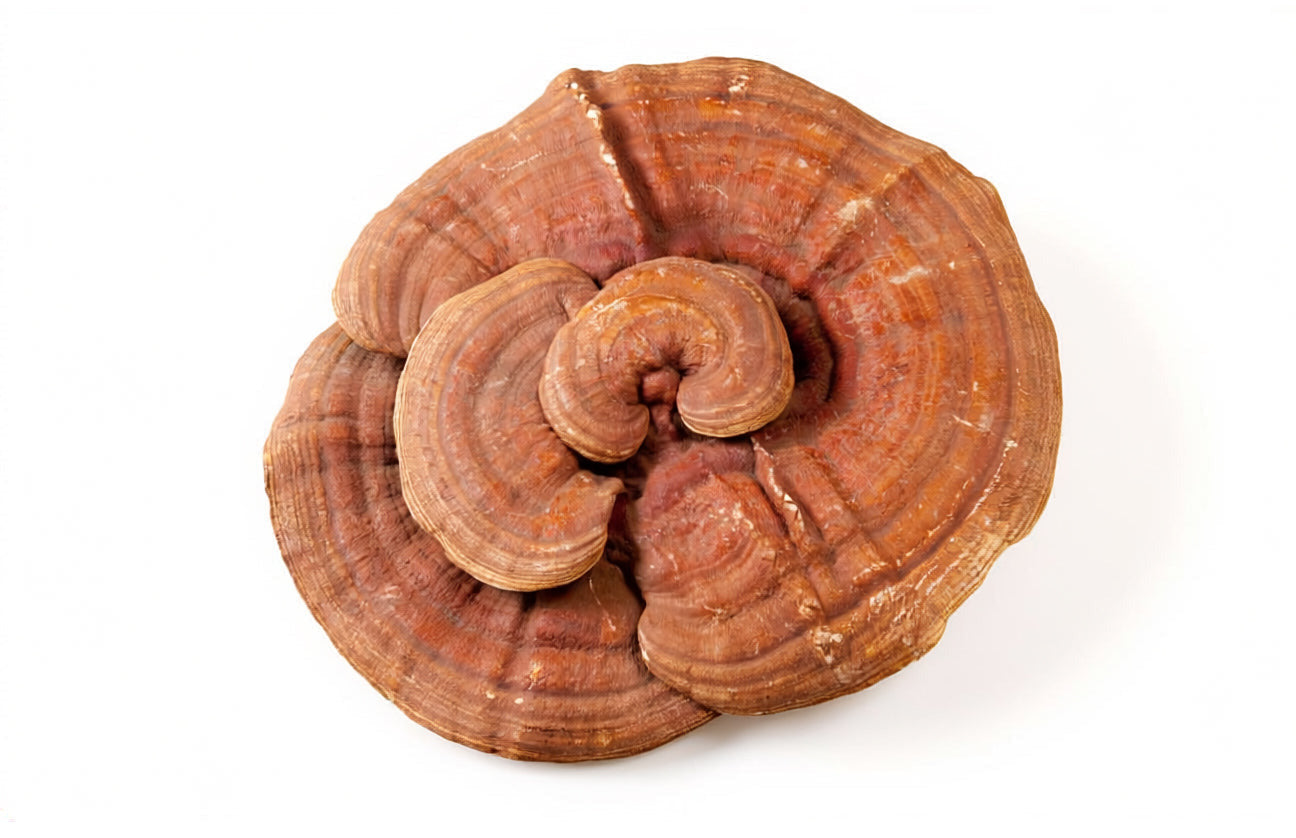
01 · Meet the mushroom
A familiar name.
A closer look.
Lingzhi is the Chinese name many families recognise. Reishi is the Japanese name. Ganoderma lucidum is a scientific name widely encountered in research and on supplement labels.
The names are connected, but not always interchangeable. Taxonomic research has clarified that “Lingzhi” on a label may refer to different Ganoderma species, including species that have historically been identified under the name G. lucidum.1
For research, the exact species and preparation matter—not just the familiar name.
02 · A place in Chinese culture
Before the laboratory,
there was a long story.
Lingzhi’s history is not only medical. It is also a story of symbolism, literature and the wish for a long life.2
Discussed in herbal texts.
The Shen Nong Ben Cao Jing and other early Chinese writings are associated with Lingzhi. Later writers continued to discuss its identity, qualities and use.2
A symbol of good fortune.
Lingzhi appeared in stories and poetry as an auspicious mushroom. Beliefs about longevity helped shape its enduring cultural significance.
From tradition to investigation.
Modern researchers ask more specific questions: which species, which compounds, which preparation—and what can actually be measured?
A long history explains why people are curious.
It does not, by itself, prove a health benefit.
03 · Traditional use
Respect the tradition.
Understand its context.
In Chinese tradition, Lingzhi has been associated with wellbeing and longevity. That heritage helps explain why its name still feels familiar today.2
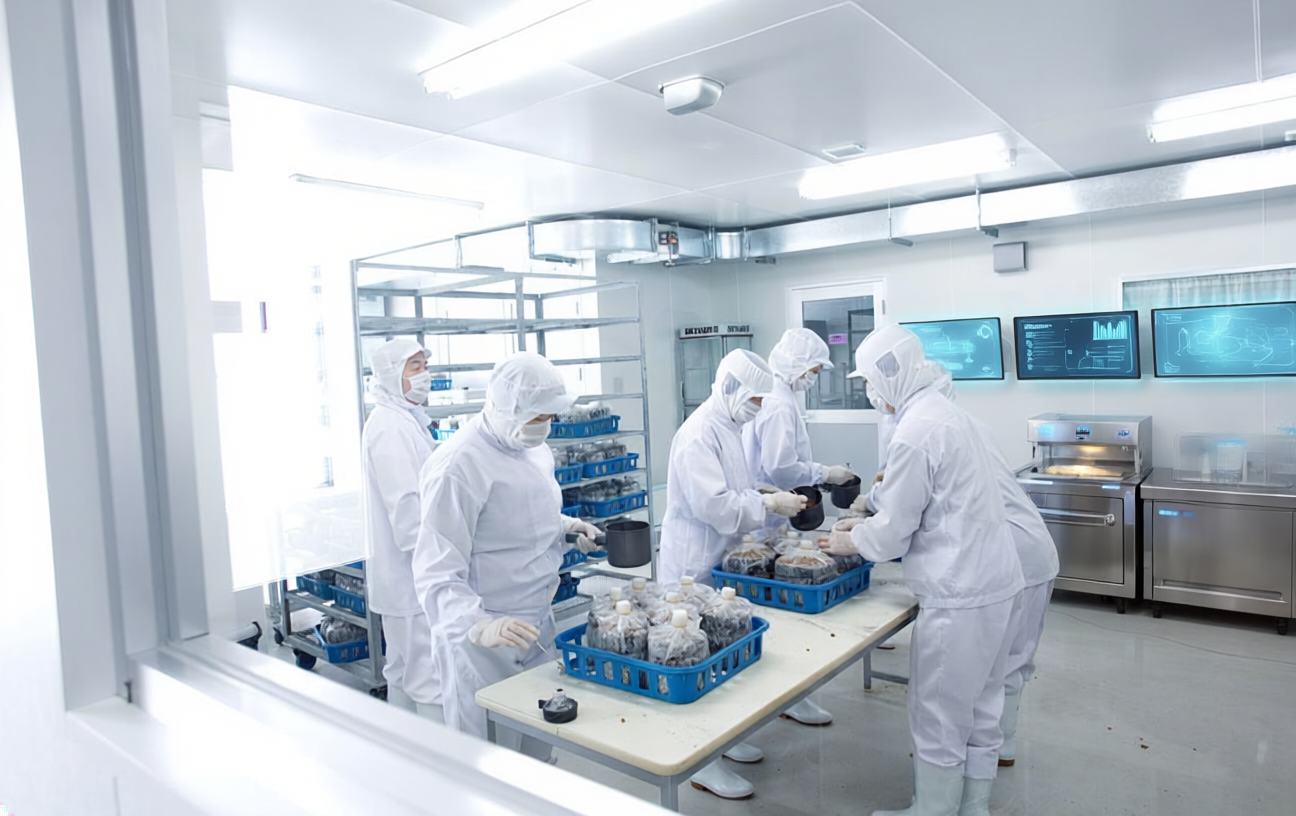
04 · Read beyond the name
One mushroom.
Different starting points.
Fruiting body, mycelium and spores describe different parts or stages of a fungus. They are not alternative names for the same ingredient.1
Fruiting body
The visible mushroom structure. It is distinct from the network that grows through its food source.
Mycelium
The network of fine fungal threads growing through material such as wood or a cultivation substrate.
Spores
Microscopic reproductive units released by the mushroom. Spore-based products are a separate type of preparation.
This is general background about Lingzhi. It does not mean that REISHI Lab. contains spores, cracked spores or dissolved spores.
Is “cracked-spore” the same as “liquid extract”?
No. “Cracked-spore” describes processing of spore walls. “Liquid extract” describes an extracted preparation in liquid form. One term does not establish the other, and neither alone demonstrates a clinical benefit.
05 · What modern science says
More precise questions.
A story still developing.
Today, scientists study particular preparations and compounds, including beta-glucans and ganoderic acids. The detail matters more than a blanket claim about “Lingzhi benefits.”
A clue is a beginning.
A 2025 study investigated ganoderic acid A in cells, worms and mice. It reported findings related to cellular ageing. Those experiments did not establish an anti-ageing benefit in people.3
Results can be less clear-cut.
A randomised trial published in 2016 did not support the tested Ganoderma lucidum intervention for cardiovascular risk factors in people with diabetes and metabolic syndrome.4
Findings belong to the species, preparation, dose and population studied. They should not automatically be applied to a different supplement—or to REISHI Lab.
Continue reading · The Science
Two compounds.
A world of discovery.
Follow the research stories behind beta-glucans and ganoderic acids.
A few useful answers
Before you read on.
Are Lingzhi and Reishi the same?
They are familiar names used for related Ganoderma mushrooms. Scientific identification is more precise: commercial names alone do not guarantee that two preparations use the same species.
Does a long history mean a supplement is proven?
No. Historical use is valuable cultural context, but it is not a substitute for evidence about a particular preparation and a particular health outcome.
Does ingredient research prove what a product will do?
No. Research on an isolated compound or another preparation does not establish the effects of the finished REISHI Lab. product. This article is educational, not treatment advice.
Read the sources
The references behind this introduction.
- Loyd AL, et al. Identifying the “Mushroom of Immortality”: Assessing the Ganoderma Species Composition in Commercial Reishi Products. Frontiers in Microbiology, 2018. Species-identification research.
- Lin Z. Ganoderma (Lingzhi) in Traditional Chinese Medicine and Chinese Culture. Advances in Experimental Medicine and Biology, 2019. Historical and cultural review—not a clinical trial.
- Chen L, et al. High-content screening identifies ganoderic acid A as a senotherapeutic to prevent cellular senescence and extend healthspan in preclinical models. Nature Communications, 2025. Preclinical research.
- Klupp NL, et al. A double-blind, randomised, placebo-controlled trial of Ganoderma lucidum for the treatment of cardiovascular risk factors of metabolic syndrome. Scientific Reports, 2016. Human clinical trial.
Selected sources for an introductory article, not a systematic review. No medical reviewer or clinical endorsement is implied. Photographs are existing project assets; they do not authenticate the species or ingredient source of any product.